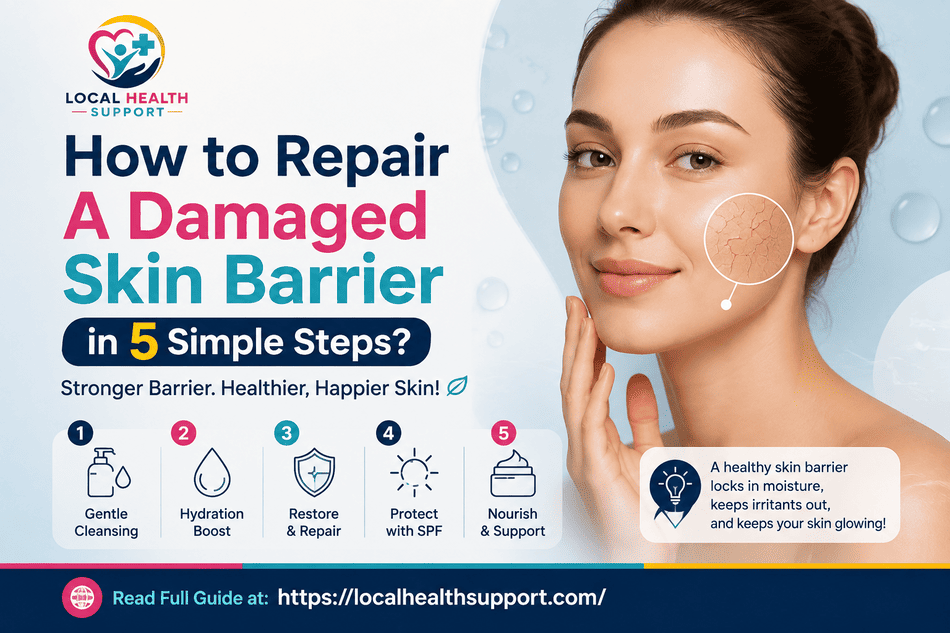
How to Repair A Damaged Skin Barrier in 5 Simple Steps?
Repair A Damaged Skin Barrier in 5 Simple Steps – A healthy and radiant skin all begins with a strong skin barrier. However, if your skin feels dry, sensitive, or irritated immediately after applying too many skin care products, it could be because of the damage to the skin barrier. Fortunately, there are steps you can take that will help you re-establish that natural barrier and with a bit of patience, you will be able to do so.
Here, we’ll discuss what a skin barrier is, what are the signs of damaged skin barrier and 5 simple steps to repair a damaged skin barrier effectively.
What is a Skin Barrier?
The skin barrier, or the outermost layer of your skin (stratum corneum), protects against environmental pollution, bacteria and moisture loss. It is like a wall composed of skin cells bound together by natural lipids such as ceramides, cholesterol and fatty acids.
A healthy barrier keeps your skin hydrated, soft, and supple. The protective layer can be compromised, though, by over-exfoliation, active ingredients, pollution, and even weather.
What are the signs of a Damaged Skin Barrier?
Early identification of the signs of damaged skin barrier will help to prevent further irritation. Common symptoms include:
- Ongoing flaking and drying.
- Redness and inflammation
- Rashes, burn or stinging on skin after skin care application
- Increased sensitivity
- Tightness after cleansing
- A textured or irregular surface.
- Unexpected acne breakouts even after using acne treatment.
When you have a combination of these symptoms, it’s time to streamline your skincare regimen.
5 Simple Steps to Repair a Damaged Skin Barrier
So, what can do you do if your skin barrier is damaged? If your skin barrier is damaged, then what can you do?
1. Stop Using Active Acids and Strong Treatments
The first step is to give your skin a rest. If you need to use the active ingredients, try to pause their use for the following:
- AHAs (Glycolic Acid, Lactic Acid)
- BHAs (Salicylic Acid)
- Retinoids
- Vitamin C (if irritating)
- Benzoyl Peroxide
These ingredients do work, but have the potential to exacerbate irritation if your skin barrier is already damaged. Give your skin time to recover before gradually reintroducing them.
2. Use a gentle and minimal skincare regimen
When it comes to healing your skin, less is more. Follow a simple routine – this includes:
- A mild, non-fragrant face wash.
- A hydrating moisturizer
- A wide-spectrum sun care product (SPF 30 or above)
Steer clear of products with alcohol, artificial perfume or chemicals that strip away the skin. A streamlined procedure that decreases tension in your skin and helps the body heal itself.
3. Apply Ceramides and Hyaluronic Acid.
Ceramides and hyaluronic acid are two of the most effective ingredients to repair the skin barrier.
A layer of ceramides replenishes the skin with vital lipids to restore barrier function, and hyaluronic acid binds and binds water to keep the skin moist.
Numerous dermatologists would suggest the best ceramide creams for face since they replenish moisture, sensibility and strengthen the barrier with time. Using a moisturizer with a high ceramide content and a hyaluronic acid serum can make a huge difference for better hydration and comfort.
4. Avoid exposure to sun, wind, and cold air
Healing skin is more susceptible to the effects of UV rays and the environment. By using sun cream every day, further irritation is prevented and recovery is aided.
Use a mild, broad spectrum sun cream for sensitive skin. Try to avoid long hours in the sun, particularly during the hottest part of the day.
5. Be patient and do not over treat
One of the worst things individuals do is continually changing products hoping for immediate success. It takes a while (2 to 6 weeks) for the skin barrier to be repaired, depending on how much damage was done.
Yes, don’t change anything or exfoliate too soon. The secret to maintaining good skin health is consistency, and it’s important to have a light regimen.
Here are some ways to naturally heal a rash.
Final Thoughts
When it comes to healing irritated skin, remember that you’re not treating the symptoms, you’re treating the skin. Drink plenty of water, take a cool shower quickly, wash your face with lukewarm water and use soft towels to dry your face. Getting a good night’s rest and consuming a balanced diet that is rich in good fats can also help to nourish the skin from the inside.
The healthy skin barrier is the base of smooth, hydrated and resilient skin. When you notice the symptoms of your skin barrier being damaged, the main focus should be on keeping your skin barrier simple, making sure you avoid harsh active ingredients and nourishing it with products that contain hydrating ingredients such as ceramides and hyaluronic acid. Given enough time and dedication, your skin can heal and regain its natural strength.
Such an expert guide from your trusted source for reliable health and skin care information, Local Health Support. Check out more skin expert-approved articles, wellness advice and skin care tips to make informed choices about your skin health and how you can heal irritated skin with confidence from Local Health Support.