Probiotics vs. Prebiotics: What’s the Difference?
Probiotics and prebiotics are frequently used interchangeably as a single product when it comes to digestive health, but they’re not identical. Both have beneficial effects on the gut health, albeit in different capacities. If you’re concerned about your body’s health, then you need to understand probiotics vs. prebiotics, because your choice will help you choose a healthier diet.
What Are Probiotics?
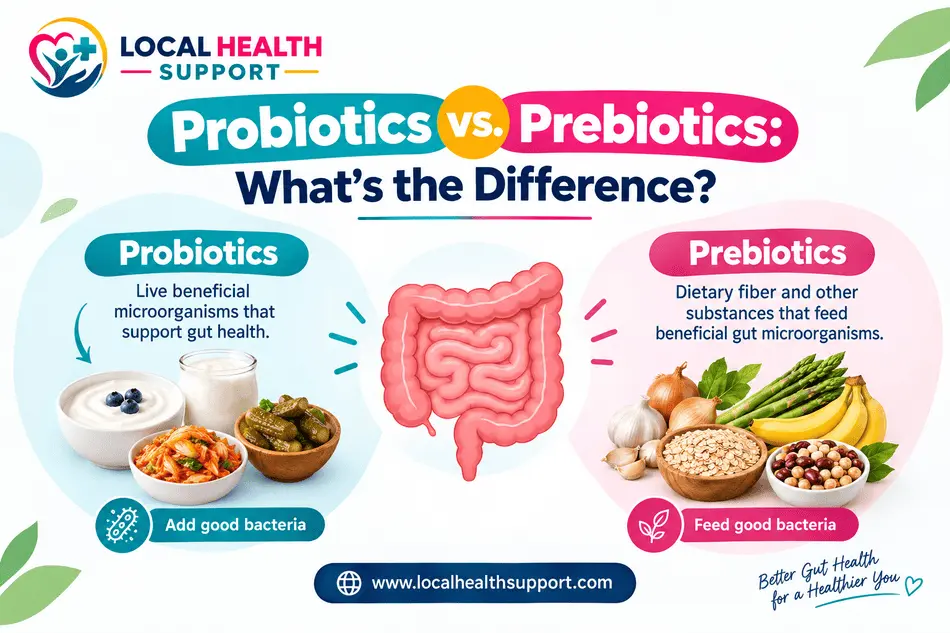
A probiotic is a micro-organism, mainly a bacteria and a few yeasts that can have a beneficial effect on health when consumed in adequate amounts. They can be found naturally in some fermented foods, or as dietary supplements.
These are some of the most common probiotic foods:
- Natural probiotic yoghurt with live cultures
- Kefir
- Some fermented vegetables
- Some foods and beverages that are fermented
The effects of the probiotics vary with the strain. For instance, some strains have been researched for promoting the health of the digestive system, and some strains may be beneficial in certain instances.
What Are Prebiotics?
Prebiotics are forms of dietary fiber and other components that feed useful bacteria that live in the gut. Prebiotics do not add bacteria to the digestive system, but help support the bacteria that are already there.
Prebiotic-containing foods include:
- Garlic
- Onions
- Leeks
- Asparagus
- Bananas
- Oats
- Legumes
- Chicory root
A diet with a wide variety of foods rich in fiber is one source of obtaining more prebiotics.
The key differences between probiotics vs prebiotics
| Probiotics | Prebiotics |
|---|---|
| Live beneficial microorganisms | Substances used as food by beneficial gut microorganisms |
| Add microorganisms to the gut | Help support existing microorganisms |
| Found in fermented foods and supplements | Commonly found in fiber-rich plant foods |
| Effects depend on the specific strain | Effects depend on the type and amount consumed |
Why Are Probiotics vs Prebiotics Important?
The gut microbiota is a complex community of microorganisms in the digestive system. This community can be affected by diet, lifestyle, medication, age and other.
In relation to certain microorganisms, probiotics might help keep a healthy balance or restore a healthy balance of microorganisms, in certain situations. Prebiotics, on the other hand, supply foods that are consumable by some intestinal microbes.
A diverse gut microbiota can be achieved by consuming a variety of vegetables, fruits, whole grains, legumes, and other fiber-rich foods regularly by many. Live cultures can also be added to foods that are fermented and consumed as part of a healthy diet.
The effects of the probiotics can be different for different people, however, and not all probiotics products are the same.
Is it safe to take probiotics vs prebiotics together?
Yes. Probiotics and prebiotics are both able to be taken together. Some products contain both are known as synbiotics.
Prebiotic fibre, for instance, can be obtained in the diet from foods like oats, onions, garlic, fruits, vegetables and legumes, and certain live microorganisms can be obtained from fermented foods.
If you’re thinking about taking a probiotic supplement, review the product information and talk with your health care provider if warranted, particularly if you have a chronic condition such as illness or if you are taking medications.
Conclusion
Probiotics and prebiotics impact the gut in different ways. Probiotics contain live organisms, whereas prebiotics contain compounds that will help the body nourish some of the existing organisms in the intestines. Varying food sources of fiber and appropriate fermented foods may be a part of a digestive wellbeing strategy.
Local Health Support is a healthcare platform that provides you with all the healthcare information you need to better understand various health and wellness topics, and makes it reliable and accessible.
Disclaimer: This blog is meant for information and education purposes only. It is not intended to be a replacement for medical advice, diagnosis or treatment by a licensed practitioner. Nutritional and health requirements may be different for each person. Always seek advice from a health expert before changing your diet or taking supplements, especially if you have a medical condition or are on medication.
Frequently Asked Questions
1. What is the difference between probiotics and prebiotics?
No. Probiotics are live microorganisms which can provide health benefits to the body, while prebiotics are foods which are consumed by beneficial microorganisms in the gut.
2. Which foods have probiotics?
Probiotics can be found in foods like yogurt containing live cultures and kefir. The number and types of microorganisms and quantities are different for each product.
What are some good foods for prebiotics?
Other fiber-rich plant foods such as garlic, onions, asparagus, bananas, oats, legumes, may supply prebiotics.
4. Do probiotics cause stomach upset?
A few may feel constipated, bloated, or have other digestive issues when first taking some probiotic products. If symptoms persist or are severe, see a health care professional.
5. Should there be supplements of probiotics?
Not necessarily. A lot of people are able to incorporate a probiotic food into their balanced diet. Use of a supplement is dependent on individual circumstances and the product in question.