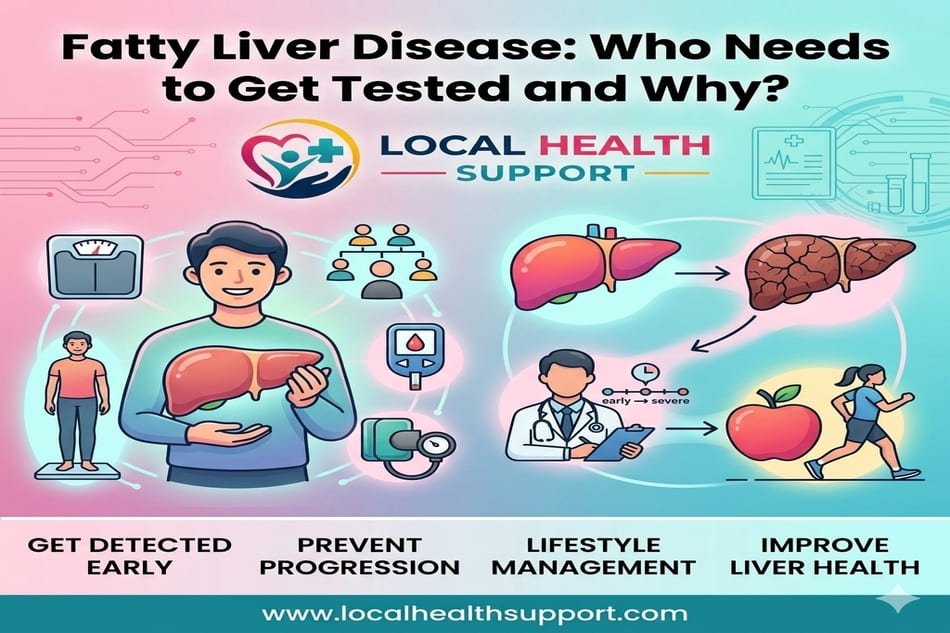
Fatty Liver Disease: Who Needs to Get Tested and Why?
Fatty liver disease is a health concern that involves an accumulation of fat in the liver. When the disease is linked to metabolic risk factors, it is now called metabolic dysfunction-associated steatotic liver disease (MASLD). These include high blood pressure, Elevated blood cholesterol and triglycerides, overweight or obesity and other metabolic issues such as type 2 diabetes.
An important worry is that fatty liver disease may not cause any symptoms in the early stages. Testing can therefore be used to identify liver fat and importantly, whether or not there are signs of liver fibrosis or advanced liver disease.
Who should be tested for Fatty Liver Disease?
Testing might be needed for individuals with one or more risk factors for fatty liver disease.
1. People who are overweight or obese
Overweight and obesity, especially if paired with more belly fat, is a significant risk factor for MASLD. Individuals with overweight and/or obesity should consult their healthcare provider about liver health, particularly if they have other metabolic risk factors.
2. Individuals who have Type 2 Diabetes or Prediabetes
Fatty liver disease and insulin resistance are closely related, and type 2 diabetes is a frequent complication of fatty liver. Individuals with diabetes may also be at increased risk for advanced liver fibrosis and it is important to assess their liver.
3. Individuals who have high cholesterol, high triglycerides or blood pressure
Cardiometabolic risk factors of MASLD include abnormal blood lipids and blood pressure. When more than one of these conditions is present, your health care provider may want to assess your liver’s health.
4. People with Abnormal Liver Enzymes
If the blood test shows increased ALT or AST, then this may be a sign of liver disease that needs to be explored. However, normal liver enzymes aren’t enough to rule out fatty liver or significant fibrosis, and tests should be based on the individual’s overall risk profile.
5. Imaging-confirmed fatty liver patients
Fatty liver can sometimes be found during an ultrasound, CT scan or MRI that was done for other purposes. If liver fat is detected, further tests might be required to assess the risk of liver fibrosis and to exclude other causes of liver disease.
Why Is Testing Important?
The diagnosis of fatty liver is only the beginning of the diagnostic process. What is more important is whether the liver has fibrosis (scarring).
Non-invasive markers, such as the FIB-4 score (based on age, AST, ALT, platelet count) can be used as a starting point for health care professionals. Based on these findings and risk factors, further investigation may be needed (e.g., vibration-controlled transient elastography [VCTE/FibroScan] or other non-invasive tests).
Identifying those at higher risk at an early stage can enable healthcare practitioners to monitor the condition and deal with related metabolic issues before other liver complications arise.
Which tests do you need to use?
Evaluation may involve:
- Liver enzyme and other health markers blood tests
- Non-invasive fibrosis assessment (FIB-4 or another)
- Other imaging techniques, such as ultrasound, of the liver
- Elastography testing is done using a machine like FibroScan.
- Any additional tests to exclude viral hepatitis and other liver diseases
- Liver biopsy in certain instances where tests do not give sufficient information.
Not all tests are required for all people who have suspected fatty liver. The proper test depends on the symptoms, the medical history, and the risk factors, as well as the results of initial tests.
Conclusion
Fatty liver disease can progress without symptoms, especially in individuals who have metabolic risk factors, such as diabetes, excess weight, abnormal levels of cholesterol or triglycerides, or high blood pressure. Testing can be helpful not only to check for liver fat, but also to check if there is possible liver fibrosis that would benefit from further investigation.
If you have risk factors for fatty liver disease, or have received a diagnosis of fatty liver disease from a healthcare professional, ask him or her about the best way to test for it. Local Health Support may also be able to assist by providing information and referral to health care and support to take the next steps in health management.
FAQs
1. Is it possible for the fatty liver disease to be asymptomatic?
Yes. Many suffer no symptoms, particularly early on. It can be found as part of a routine blood test or imaging.
2. If someone has fatty liver does it indicate liver damage?
Not necessarily. Fat accumulation and liver fibrosis are two different findings. Further assessment may be required to ensure that there is no significant scarring.
3. Can normal liver enzymes exclude fatty liver disease?
Not all liver enzymes are normal, and therefore a fatty liver and liver fibrosis cannot be ruled out. Other test results and risk factors should also be taken into account.
4. What is a FIB-4 test?
FIB-4 is a non-invasive formula that uses age, AST, ALT and platelet count. It may assist in determining those who might benefit from additional testing for advanced liver fibrosis.
5. Should all people be screened for fatty liver disease?
Testing is usually carried out for those with risk factors and clinical indications, but not routinely performed on all individuals. Your healthcare professional will be able to decide if you should be evaluated.
Disclaimer: This blog does not provide medical advice, diagnosis or treatment, and should not be used as a replacement for it. If you have concerns about fatty liver or about your liver, talk with a qualified health care professional.