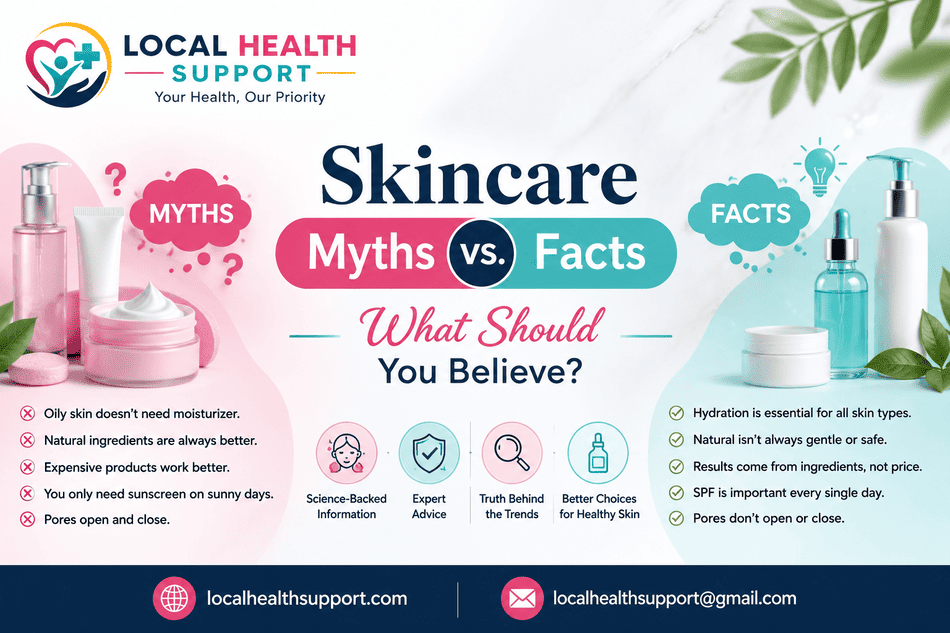
Skincare Myths vs Facts: What Should You Believe?
skincare myths vs facts – There are many pieces of skin care information, trends and popular beauty hacks out there in the skincare world. While some skin care advice is good, others are myths and not based upon information. But sometimes, incorrect advice can aggravate skin or exacerbate skin issues.
Knowing the difference between a myth and a fact with skin care can help you develop an easy and effective skin care regimen.
Skincare Myths vs Facts
Myth 1: Oily Skin Does Not Need Moisturizer
Fact: Oily skin still needs hydration.
The skin becomes tight or uncomfortable and sometimes has an increased oil production when it is dehydrated. A light non-comedogenic moisturizer can help balance the moisture in the skin without leaving it greasy.
Myth 2: Sunscreen Is Only Necessary on Sunny Days
Fact: Sunscreen should be used regularly during the daytime.
You can still get sunburnt on cloudy days. Frequent application of sunscreen can help prevent sunburn, premature skin aging and skin damage caused by the sun. Use a broad spectrum sunscreen and follow application instructions.
Myth 3: More Skincare Products Mean Better Skin
Fact: A complicated routine is not always better.
More than one product may increase the risk of irritation, particularly when multiple active ingredients are present in the same product. For many, a simple regimen of a mild cleanser, moisturizer, and sunscreen may be an effective place to start.
Another myth is that natural ingredients are always more beneficial for the skin.
Myth 4: Natural Ingredients Are Always Better for Your Skin
Fact: Natural does not automatically mean safer or more effective.
Certain natural components may irritate or cause allergies. Likewise, ingredients that are developed or processed for skin care products can be well-researched and effective. The most important factor is if the ingredient is suitable for your skin and how it’s made.
Myth 5: Scrubbing Your Face Removes Acne
Fact: Harsh scrubbing can irritate acne-prone skin.
Acne does not just occur because of dirt on the skin surface. This is because rough physical exfoliation may break the skin barrier and cause irritation. It is better to use gentle cleansing and treatments for acne.
Myth 6: Drinking More Water Alone Will Cure Dry Skin
Fact: Hydration is important, but dry skin usually needs more than increased water intake.
There are many factors that can lead to dry skin, including weather, skin care routines, and genetics. Appropriate moisturizers and gentle cleansers can be used to maintain the moisture barrier in the skin.
Myth 7: You Can Get Rid of Pores Permanently
Fact: Pores are a normal part of skin and cannot be permanently removed.
They may look different depending on how much oil is produced, the elasticity of the skin and genetics. Some skin care treatments and products can help to conceal the appearance of pores, but it is not possible to eradicate pores with any of these.
Myth 8: Toothpaste Can Treat Pimples
Fact: Toothpaste is not designed to treat acne.
While some of the ingredients in toothpaste might dry, there are substances in toothpaste that can irritate the skin. May cause redness, dryness or irritation when applied to pimples. Acne products that have been specially developed for acne are safer.
Myth 9: You Need to Feel a Burning or Tingling Sensation for a Product to Work
Fact: A strong tingling or burning sensation does not necessarily mean a skincare product is working.
Mild sensations on initial use is not a problem, but when the significant burning, swelling or prolonged redness happens, it is a problem. Discontinue use of a product if it produces a strong reaction and consult a professional if symptoms persist.
Myth 10: Skincare Results Should Be Visible Immediately
Fact: Many skincare products require consistent use over time.
The amount of time required for results varies depending on the product, skin concern, and skin type. It is better to stick to one product or procedure than to constantly try different products and procedures to get immediate results.
Creating a Skincare Routine that Works for You!
Avoid following all the skin care trends; Instead, select skin care products and habits that are suitable for your skin type and concerns. Introduce new products slowly, use products according to their instructions and do not use several strong active ingredients without knowing how they interact.
If your acne is stubborn and you are still having issues with it, if it has caused significant irritation or other unusual changes in your skin, or if you have another skin issue that you’re worried about, it may be best to speak to a doctor instead of using a skin care tip from the internet.
Conclusion
It can be hard to determine what your skin needs when skin care myths are in the picture. There’s a lot more to be gained from simple, consistent routine and evidence-based skincare tips than from complicated routines or viral beauty tips.
Local Health Support is a platform that provides healthcare information, helping individuals make informed decisions about their health and well-being.